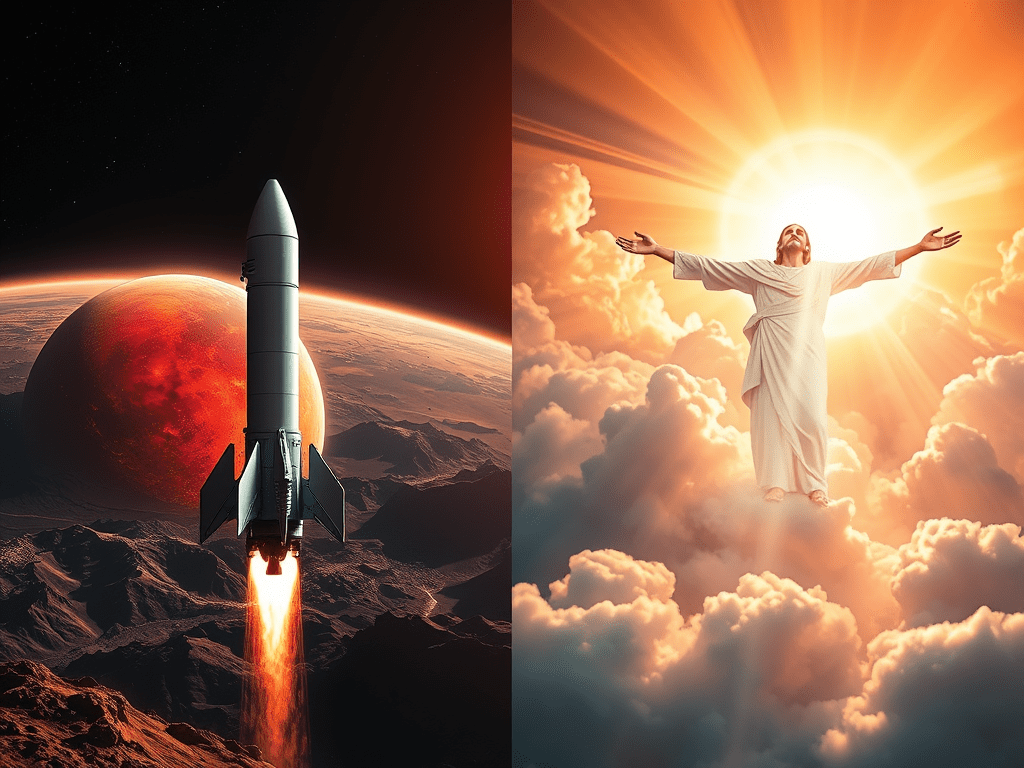
Elon Musk believes humanity’s survival depends on becoming a multi-planetary species—starting with Mars. But this bold vision challenges the Christian perspective, which places ultimate hope not in space exploration, but in the promised return of Jesus Christ. In this episode, we dive deep into both worldviews: the technological dream of escaping Earth’s doom and the prophetic promise of divine rescue. Tune in as we compare these competing end-time narratives and invite you to reflect—where does true salvation lie?
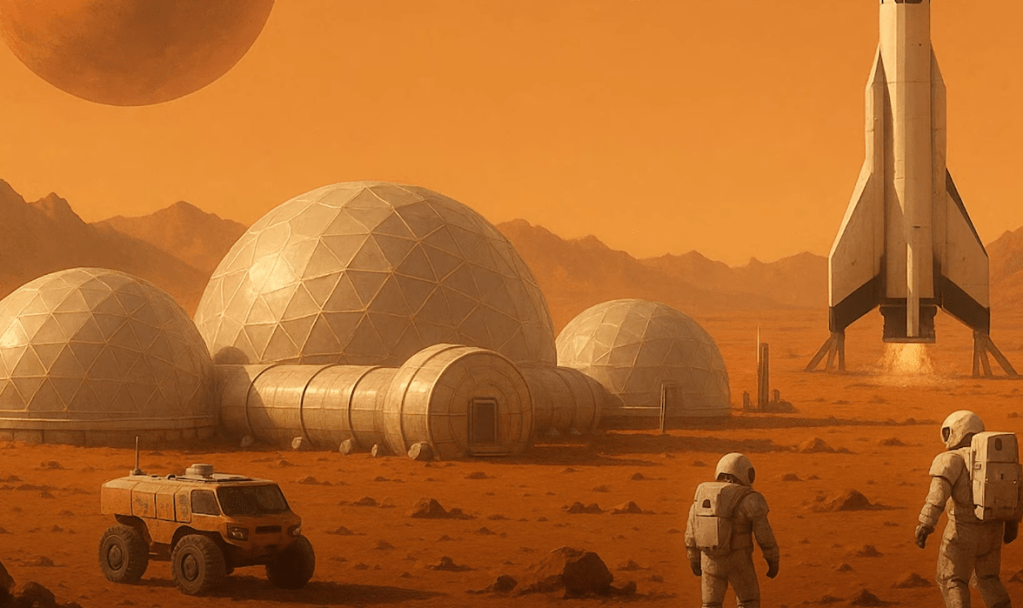
Mars vs. Messiah: How Elon Musk’s Vision Conflicts with Biblical Eschatology
In recent years, Elon Musk has captivated the world with his ambitious goal of colonizing Mars. To Musk, establishing a permanent human settlement on another planet isn’t just science fiction—it’s a necessity. He believes that Earth’s future is fragile and that humanity must become a multi-planetary species to survive potential catastrophes, such as nuclear war, climate collapse, or technological extinction. In Musk’s vision, Mars represents a second chance for civilization.
While this idea appeals to many as a symbol of innovation and hope, it stands in sharp contrast to the biblical worldview—especially the Christian doctrine of eschatology, which is the study of end-times.
🚀 A Man-Centered Future
Musk’s vision is built upon human ingenuity, technological advancement, and the idea that salvation—if it comes at all—must come from within ourselves. In his perspective, the survival of the species rests in our own hands. The future is uncertain, but with enough effort, intelligence, and resources, we can overcome existential threats and extend human life beyond Earth.
This idea reinforces the secular belief that mankind is both the problem and the solution. It sidelines any need for divine intervention and assumes that our destiny is ours to shape through science and reason alone.
✝️ A Christ-Centered Ending
By contrast, the biblical narrative presents a very different picture. According to Scripture, the future of humanity is not uncertain, but foreordained. The Bible teaches that history is moving toward a divine climax—the return of Jesus Christ, who will establish God’s kingdom on Earth, judge the nations, and bring an end to suffering and sin (Revelation 19–22).
From this perspective, there is no “Plan B” on Mars. The Bible does not suggest humanity will escape judgment or extend life through technology. Instead, it emphasizes repentance, faith in Christ, and preparation for His coming. Jesus said in Matthew 24:30-31:
“Then will appear the sign of the Son of Man in heaven. And then all the peoples of the earth will mourn when they see the Son of Man coming on the clouds of heaven, with power and great glory.”
Christian eschatology views the earth not as a place to flee, but as the stage upon which God’s redemptive plan unfolds. Rather than evacuating the planet, the Bible calls believers to remain faithful and to expect the restoration of creation, not its abandonment.
⚖️ Two Competing Hopes
At its core, Musk’s plan is rooted in fear of extinction; the biblical plan is rooted in faith in redemption. One looks to Mars for salvation; the other looks to the Messiah.
This doesn’t mean Christians should reject science or exploration, but it does mean we must be cautious of placing ultimate hope in human efforts. Mars may offer technological fascination, but it cannot offer eternal life.
As we weigh these competing visions of the future—one driven by rockets and reason, the other by prophecy and promise—we are all faced with a choice: do we place our hope in man’s ability to save himself, or in God’s promise to rescue those who trust in Him?
Conclusion
Elon Musk’s dream is bold, imaginative, and deeply humanistic. But it diverges sharply from the biblical view that only Jesus Christ can rescue humanity—not from extinction, but from sin and eternal separation from God. As believers, we are not called to build escape pods—we are called to build the Kingdom.






Leave a comment