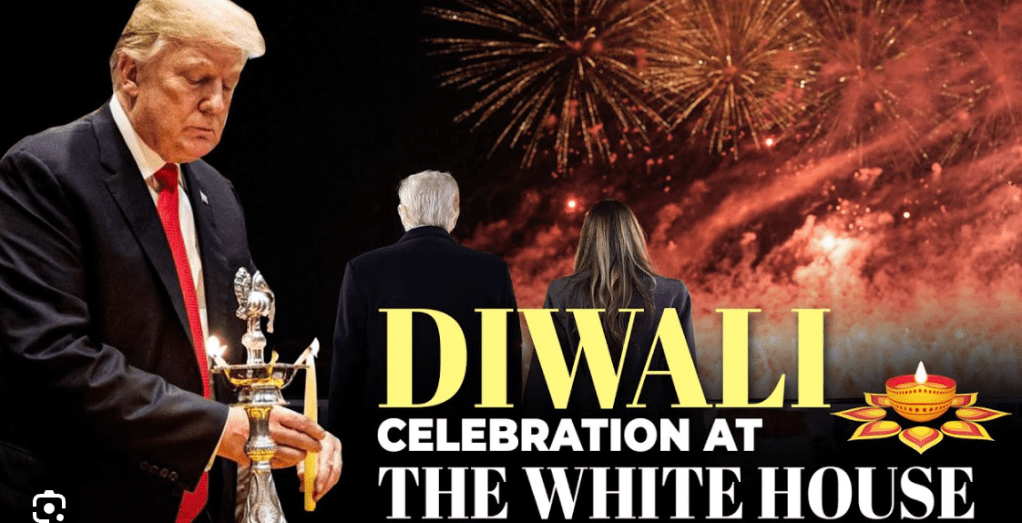
Some of President Donald Trump’s MAGA supporters expressed outrage on Tuesday after he hosted a White House event honoring the Hindu festival of Diwali.
Diwali, known as the “Festival of Lights,” is one of the most significant celebrations in Hinduism. Spanning five days, it commemorates the triumph of light over darkness and good over evil. The occasion holds for Hindus a similar cultural importance to what Christmas represents for Christians. Trump had also recognized and celebrated Diwali during his previous term in office.
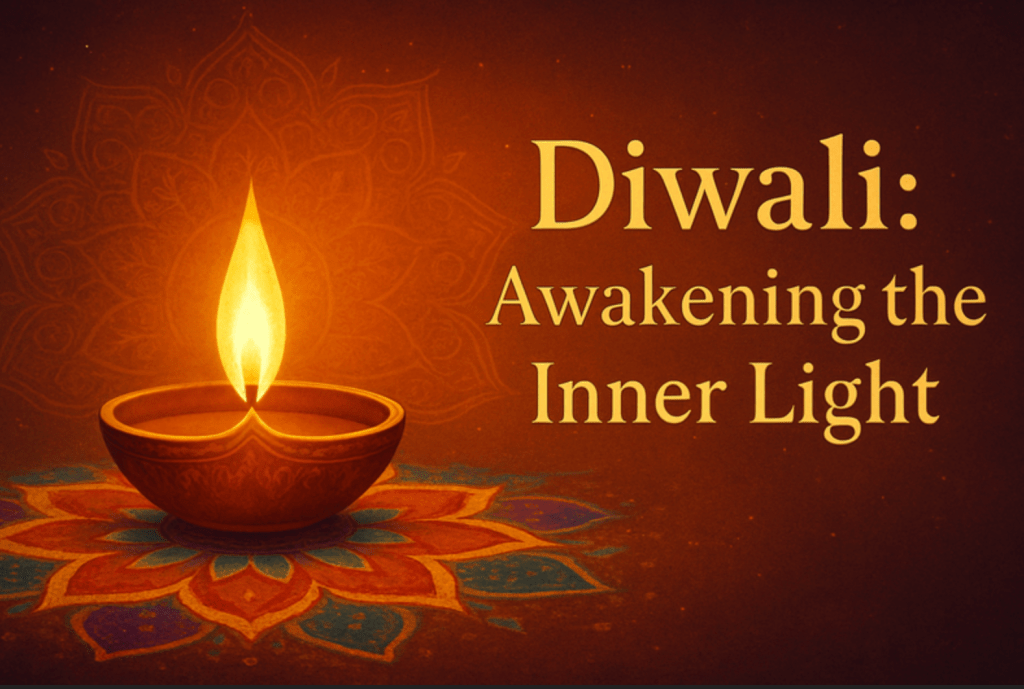
Diwali (also called Deepavali) is a major Hindu festival celebrated by millions of people in India and across the world. It is known as the Festival of Lights, symbolizing the triumph of light over darkness and good over evil.
However, behind the appealing imagery and cultural celebration lies deep religious significance tied to Hindu, Jain, and Sikh theology — systems that fundamentally contradict Christian belief in the one true God.
🕉️ Pagan (Religious) Significance
From a biblical worldview, Diwali is rooted in pagan worship because it involves the veneration of false gods. Here are the main spiritual elements:
- Worship of Lakshmi – the Hindu goddess of wealth and prosperity.
- People light lamps and pray to Lakshmi to bless their homes and businesses with wealth.
- This is an act of idolatry — the worship of created beings rather than the Creator (Romans 1:25).
- Reverence for Other Deities – depending on the region, Diwali also celebrates:
- Vishnu (as the god who defeats evil),
- Krishna (an incarnation of Vishnu who kills the demon Narakasura),
- or Rama (returning from exile after defeating Ravana in the Ramayana).
Each story glorifies polytheism — the belief in many gods.
- Spiritual Cleansing Rituals – homes are purified, lamps are lit, and sacrifices or offerings (puja) are made to invite good spirits and repel evil ones.
- These rituals stem from the belief that human acts can manipulate spiritual forces — the very definition of sorcery or superstition condemned in Scripture (Deuteronomy 18:9–12).
✝️ Why a Christian Should Not Practice Diwali
Even though Diwali may appear to be a “cultural” festival, its roots and rituals are spiritual — and they honor deities other than the God of the Bible.
Here’s why participation conflicts with Christianity:
- Violation of the First Commandment “You shall have no other gods before Me.” – Exodus 20:3
Lighting lamps or offering prayers to Lakshmi or any other deity is a direct breach of God’s command against idolatry. - Spiritual Mixture (Syncretism)
- Christians are warned not to blend the worship of God with pagan customs.
- Paul wrote: “What fellowship has light with darkness? … or Christ with Belial?” – 2 Corinthians 6:14–15
- Participating “symbolically” still communicates agreement with the spiritual meaning of the event.
- Spiritual Defilement and Witness
- Scripture repeatedly warns against engaging in pagan festivals because it corrupts our testimony and invites spiritual compromise (1 Corinthians 10:20–21).
- When believers join such observances, it can cause confusion about who we truly worship.
- Christ Already Conquered Darkness
- Diwali celebrates light overcoming darkness — but for Christians, that victory is already fulfilled in Christ: “I am the Light of the world.” – John 8:12
- We don’t need candles or rituals to symbolize light’s triumph; we have the living Light, Jesus Christ.
💡 Christian Response
A Christian can use the time of Diwali to:
- Pray for those deceived by idolatry to come to the knowledge of the true Light.
- Show love to Hindu friends without partaking in their worship rituals.
- Share the Gospel by explaining that true freedom from darkness is not found in Lakshmi or ritual, but in Jesus Christ who saves by grace, not by offerings.
🕊️ In Summary
| Diwali Concept | Biblical Response |
|---|---|
| Worship of Lakshmi for prosperity | “You cannot serve both God and money.” (Matt. 6:24) |
| Lighting lamps to invite good spirits | “God is light, and in Him is no darkness at all.” (1 John 1:5) |
| Cleansing rituals to remove bad karma | “The blood of Jesus cleanses us from all sin.” (1 John 1:7) |
| Celebration of many gods | “The Lord our God, the Lord is one.” (Deut. 6:4) |






Leave a comment